Repair, Restore or Replace? How to Know What Your Roof Actually Needs
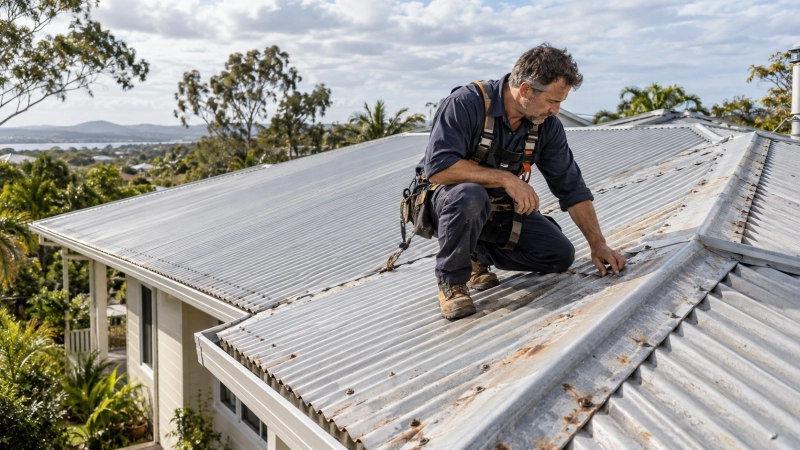
A leaking or ageing roof does not automatically mean you need a new one. In many cases, a well-targeted roof repair is all that is required. In others, repairing the same problems over and over can end up costing more while simply postponing work the roof genuinely needs.
The difficult part for most homeowners is knowing which situation they are dealing with.
A small ceiling stain might come from one relatively simple problem. Visible rust could be isolated to a particular area or point to more widespread deterioration. And a roof that looks tired from the ground may still have years of useful life left.
The right decision depends less on how bad one problem looks and more on the condition of the roof around it.

That is why the decision to repair, restore or replace a roof should start with understanding what is actually happening, rather than choosing a solution before the roof has been properly assessed.
Repair, restore or replace: what is the difference?
Although the terms are sometimes used interchangeably, they describe quite different levels of roofing work.
Roof repair
A roof repair addresses a particular fault or damaged area. That might include a leak, damaged flashing, loose or deteriorated roofing components, localised corrosion, storm damage or another isolated problem.
If the surrounding roof is still in good condition, repairing the problem can be the most practical and economical solution.
Roof restoration
A roof restoration is more extensive than an isolated repair. Rather than concentrating on one fault, the roof is assessed more broadly and work is carried out to address deterioration and extend the useful life of a roof that is still fundamentally worth preserving.
The work required depends entirely on the roof, its material and its condition. Restoration should not simply be about making an old roof look newer. It should address genuine issues affecting the roof’s condition or performance.
Roof replacement or re-roofing
A roof replacement or re-roof is a much larger job involving the removal of the existing roofing material and installation of a new roof.
It becomes worth considering when deterioration is widespread, problems keep returning, or the existing roof has reached the stage where continued repair is no longer sensible.
You can learn more about the process on our re-roofing and roof replacement page.
The important point is that repair, restoration and replacement are not simply three increasingly expensive versions of the same job.
They solve different problems.
Start with the condition of the roof, not the obvious symptom
When homeowners contact us about a roof problem, they usually begin by describing what they can see.
There might be water appearing on a ceiling, rust visible on part of the roof, damage following a storm or a section that has already been repaired more than once.
Those observations are useful, but they do not always tell us where the problem begins.
Water is a good example. The place where a stain appears inside your home is not necessarily directly below the point where water is entering. Water can travel along roofing components before it finally becomes visible inside.
The same principle applies to visible deterioration. Repairing one obviously damaged component may solve the immediate issue, but it may not make sense if the surrounding roof is experiencing the same deterioration and is likely to cause another problem shortly afterwards.
That is why an experienced roofer should be asking two different questions:
- What is causing the immediate problem?
- What condition is the rest of the roof in?
Once those questions have been answered, it becomes much easier to decide whether a repair, restoration or replacement represents the best value.
When does repairing a roof make sense?
Roof repairs generally make sense when the problem is reasonably isolated and the surrounding roof remains serviceable.
Examples can include:
- A localised roof leak
- Damage to a particular area after severe weather
- Problems with flashing or roof penetrations
- Loose or deteriorated fixings
- Localised corrosion or deterioration
- A guttering or drainage problem affecting one part of the roof
- Damage that has not affected the condition of the wider roofing system
In situations like these, replacing an otherwise sound roof would make little sense.
The key is to identify the cause of the problem rather than simply treating what is visible.
Sealing something that is leaking, for example, may temporarily stop water getting in. But if movement, deterioration, damaged flashing or another underlying issue caused the leak in the first place, there is a good chance the problem will return.
A good roof repair should solve the cause, not just hide the symptom.
Repairs can also make sense on older roofs. Age alone does not determine whether a roof needs replacing. An older roof that has been well maintained and remains in sound condition may still be suitable for targeted repairs.
When is roof restoration worth considering?
Restoration can make sense when a roof is showing broader signs of age or deterioration but is still fundamentally sound.
This is an important distinction.
If the underlying roof is still serviceable, addressing deterioration before it becomes severe may extend its useful life and postpone the need for complete replacement.
However, restoration only represents good value when the roof is genuinely a suitable candidate.
If deterioration has become widespread, multiple areas are failing, or the roof has reached the end of its practical life, spending money restoring it may simply delay work that will still be required later.
The reverse is equally true. Replacing a roof that could reasonably be repaired or restored may mean spending considerably more than necessary.
That is why we would never suggest choosing between restoration and replacement based purely on appearance.
When does roof replacement become the smarter option?
There eventually comes a point where continuing to repair a deteriorating roof stops making financial sense.
That does not necessarily mean the entire roof has failed. More often, it means the problems have become widespread enough that individual repairs are no longer solving the bigger issue.
Roof replacement becomes more worth considering when:
- Deterioration is appearing across multiple areas of the roof
- Corrosion or damage has become extensive
- Leaks repeatedly return after previous repairs
- The roof has accumulated numerous patches or temporary fixes
- Several roofing components are deteriorating at the same time
- Repairing one area is likely to be followed by repairs elsewhere
- The cost of keeping the existing roof serviceable is becoming difficult to justify
At that stage, another repair might still be technically possible.
But the better question is no longer simply “Can this be repaired?”
It becomes:
“Does repairing this roof still make financial sense?”
If you spend money repairing one section this year, another section next year and another problem six months later, you may eventually have invested a substantial amount into a roof that still needs replacing.
In those circumstances, re-roofing can provide greater certainty and remove the cycle of recurring repairs.
That does not mean replacement should be the automatic recommendation whenever a roof is old or damaged. It should be recommended when the overall condition of the roof justifies it.
The six things we look at before recommending anything
There is no single test that determines whether a roof should be repaired, restored or replaced.
Instead, several factors need to be considered together.
1. Is the problem isolated or widespread?
One damaged area on an otherwise sound roof is very different from the same type of deterioration appearing across multiple sections.
The extent of the problem often tells us more than how dramatic one particular area looks.
2. What is actually causing the problem?
Leaks, corrosion and visible damage are often symptoms rather than complete diagnoses.
That means looking beyond the obvious problem and considering components such as flashing, roof penetrations, fixings, joins, drainage and gutters where relevant.
If the underlying cause is not addressed, even a neatly completed repair may not stop the problem from returning.
3. What condition is the surrounding roof in?
No repair exists in isolation.
If the roofing material around the damaged area is also deteriorating, fixing one small section may only buy a short amount of time.
If everything surrounding the damaged section remains sound, however, a targeted repair may be all that is required.
4. What work has already been done?
Previous repairs can tell us a great deal about a roof.
One professionally completed repair several years ago is very different from a roof that has accumulated patch after patch in response to recurring problems.
If the same issue keeps returning, we need to understand why rather than simply repeating the previous fix.
5. What has the roof been exposed to?
Two roofs of a similar age can be in completely different condition.
Strong sun, heat, heavy rain, storms, coastal exposure, surrounding vegetation and maintenance history can all influence how quickly roofing components deteriorate.
This is particularly relevant throughout regional Queensland.
Homes around Hervey Bay, Gladstone and other coastal areas can face different exposure from properties further inland, while homes around Rockhampton, Bundaberg and surrounding regions regularly experience intense sun, heavy rain and severe weather.
The number of years a roof has been installed is useful information, but it never tells the whole story.
6. Which option makes sense over the longer term?
This is ultimately where everything comes together.
A repair might be the cheapest option today without being the least expensive option over the next several years.
At the same time, there is no benefit in replacing a roof that still has plenty of useful life remaining.
The aim is to choose the solution that makes sense for the condition of the roof, the likely longevity of the work and the circumstances of the homeowner.
Why the cheapest option is not always the least expensive
Nobody wants to spend more on roofing work than necessary.
That is entirely reasonable.
Where homeowners can get caught out is comparing the price of a short-term repair with the price of a longer-term solution as though both provide exactly the same outcome.
Consider two different situations.
Scenario one: the isolated problem
A section of an otherwise healthy roof develops a repairable fault. The surrounding roof is sound and there are no indications of widespread deterioration.
In that case, a targeted repair may offer excellent value. Replacing the roof would achieve very little beyond dramatically increasing the cost.
Scenario two: the recurring problem
An ageing roof develops a leak. It is repaired, but another section begins leaking the following year. Other areas are showing similar deterioration and previous repairs are becoming increasingly common.
Each individual repair may appear cheaper than replacement.
Collectively, however, the homeowner may continue spending money without gaining confidence in the roof as a whole.
In that situation, the more expensive option upfront may ultimately provide better value.
The cheapest quote is not necessarily the cheapest solution. The best value comes from matching the work to the actual condition of the roof.
Queensland conditions can be hard on roofs
Roofs across regional Queensland have to cope with considerable environmental stress over their lifetime.
Long periods of strong sun and heat can be followed by heavy rain, strong winds and severe storms. Properties closer to the coast may experience additional exposure, while individual roofs can age differently depending on their orientation, design, surrounding trees and maintenance history.
This is why broad rules such as “a roof should always be replaced after a certain number of years” are not particularly helpful.
Some roofs remain serviceable for a long time with appropriate maintenance. Others experience problems earlier because of their material, installation, exposure or history.
Regular roof inspections, repairs and maintenance can help identify deterioration while it is still manageable, particularly after significant weather events or once a roof begins showing signs of age.
Warning signs that are worth having checked
You do not need to diagnose your own roof, and climbing onto a roof without appropriate equipment and experience can create unnecessary safety risks.
There are, however, warning signs you can notice safely from around your property.
- Water stains appearing on ceilings or walls
- Leaks during heavy or wind-driven rain
- Visible rust or deterioration
- Loose, lifted or damaged roofing material
- Problems that keep returning after previous repairs
- Overflowing, rusted or deteriorated gutters
- Visible damage following a severe storm
- Unexplained dampness or moisture inside the home
- Sections of the roof that appear noticeably different from surrounding areas
None of these signs automatically means you need a new roof.
They simply indicate that it is worth finding out what is happening before a manageable problem develops into something more expensive.
What should you ask a roofer before approving the work?
Whether you are talking to Pitch-Perfect Roofers or another contractor, you should understand why particular work is being recommended.
Before approving substantial roofing work, consider asking:
- What is actually causing the problem?
- Is the damage isolated or are similar problems appearing elsewhere?
- What condition is the rest of the roof in?
- If we repair this section, what condition is the surrounding roofing material in?
- What would restoration achieve that a smaller repair would not?
- Why are you recommending replacement rather than repairing the existing roof?
- Are flashing, fixings, gutters or other components contributing to the problem?
- Is the proposed work fixing the underlying cause or only dealing with the immediate symptom?
A good roofer should be able to explain the reasoning in plain English.
You should not need to understand roofing terminology to make an informed decision about your own home.
Frequently asked questions about repairing or replacing a roof
Does a leaking roof always need to be replaced?
No. Many roof leaks are caused by localised problems that can be repaired without replacing the entire roof. The important thing is to identify where the water is entering, what caused the problem and whether the surrounding roof remains sound.
How do I know if my roof is beyond repair?
There is no single warning sign that determines this. Widespread deterioration, recurring leaks, extensive corrosion, numerous previous repairs and multiple sections failing at the same time can all indicate that further repairs may no longer represent good value. The overall condition of the roof needs to be assessed.
Is roof restoration cheaper than replacing a roof?
A restoration will generally involve less work than complete replacement, but that does not automatically make it the right option. Restoration only makes financial sense when the existing roof is in suitable condition to justify preserving it. Restoring a roof that already needs replacing may simply add another expense before the eventual replacement.
Can an old roof still be repaired?
Yes. Age alone does not determine whether a roof can be repaired. An older roof that remains sound may still be suitable for targeted repairs. What matters more is the condition of the roofing material, the extent of any deterioration and whether the problem is isolated or widespread.
Should I replace my roof if it keeps leaking?
Recurring leaks are a reason to investigate the roof more thoroughly, but they do not automatically mean replacement is necessary. The key is determining whether the same unresolved fault is causing the leaks or whether deterioration is appearing in multiple areas. If repairs are becoming frequent because the roof as a whole is deteriorating, replacement may become the more economical long-term option.
Should I get my roof inspected after a major storm even if it is not leaking?
If your property has experienced significant weather and you have reason to suspect damage, an inspection can help identify problems that may not yet be visible from inside the home. Not all roof damage causes an immediate leak, and addressing localised damage early can sometimes prevent larger problems later.
So, what does your roof actually need?
Sometimes the answer is straightforward.
A minor, isolated problem can be repaired and the roof can continue doing its job for years.
In other situations, broader restoration work may make sense because the roof is ageing but still fundamentally worth preserving.
And eventually every roof reaches a point where replacing it becomes more sensible than continually repairing it.
The important thing is not deciding which service you want before anyone has properly looked at the roof.
Start by finding out what condition your roof is actually in.
Pitch-Perfect Roofers has more than 20 years of roofing experience across regional Queensland. Our approach is to assess what is happening, explain the available options clearly and recommend the solution that makes sense for the roof in front of us.
If you have noticed a leak, deterioration, storm damage or simply aren’t sure how much useful life your roof has left, we can inspect the situation and help you understand your options.
Request a free roofing quote or call Pitch-Perfect Roofers on 0412 856 623 to find out whether your roof needs a repair, restoration or replacement.


 Pitch-Perfect Roofers
 Pitch-Perfect Roofers
 Pitch-Perfect Roofers